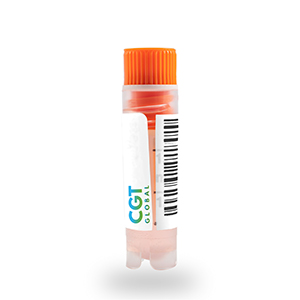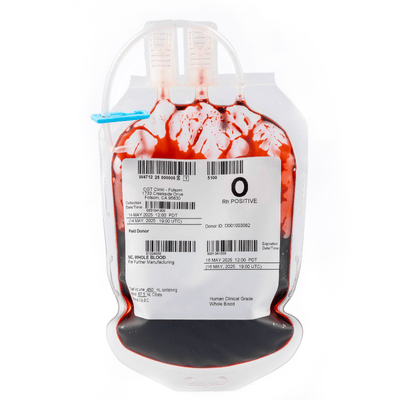
Cord Blood Mononuclear Cells, Frozen
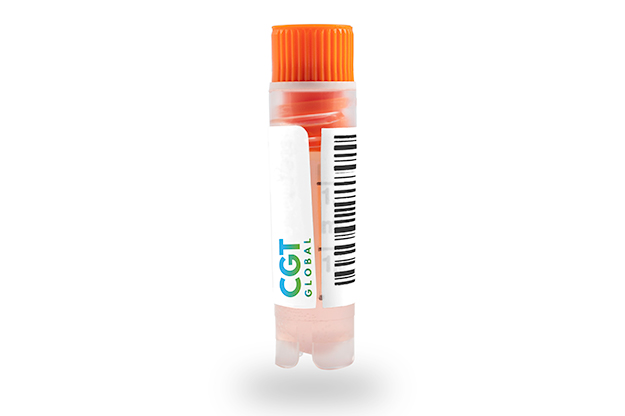
Cord Blood Mononuclear Cells (MNCs)
The mononuclear cell (MNC) fraction isolated from umbilical cord blood includes lymphocytes (T cells, B cells, and NK cells), monocytes, dendritic cells, and stem/progenitor cells. These cells are essential to both humoral and cell-mediated immune responses and are widely used in research and clinical applications related to immunology, infectious disease, hematologic malignancies, vaccine development, transplantation, and high-throughput screening.
Cord blood MNCs are separated using density gradient centrifugation, screened for CD45 expression and viability via flow cytometry, and cryopreserved. All collections are performed under IRB-approved protocols with informed donor consent.
Since our founding in 2010, CGT Global has pursued our mission to transform healthcare as we accelerate cell and gene therapy research and clinical trials, streamline the commercialization of new treatments, and map the last mile to patient access to these life-changing remedies. By innovating each stage in the cycle; development, commercialization, and delivery, we reduce the overall cost of the care and multiply access points so that millions can receive cutting edge, life-saving gene and cell therapies.

Description
The mononuclear cell (MNC) fraction is composed of lymphocytes (T cells, B cells, and NK cells), monocytes, dendritic cells, and stem/progenitor cells. These cells are critical components of the immune system and play key roles in the humoral and cell-mediated immune responses. Mononuclear cells are commonly used in research and clinical applications in the areas of immunology, infectious disease, hematological malignancies, vaccine development, transplant therapy, and high-throughput screening.
Human cord blood mononuclear cells are separated from umbilical cord blood by means of a density gradient centrifugation protocol. MNCs are screened for the expression CD45 and checked for viability using flow cytometry prior to cryopreservation. This highly pure population of cells makes them ideal for further isolations of specific cell types within the mononuclear fraction.
Cells were obtained using Institutional Review Board (IRB) approved consent forms and protocols.
Additional information
| Anticoagulant | |
|---|---|
| Format | |
| Grade | |
| Species | |
| Disease State | |
| Donor Attributes |
Product Information Sheet
Certificate of Analysis
Material Safety Data Sheet
Protocols
Used in Research
Selected publications demonstrating the use of human cord blood and cord blood–derived hematopoietic stem cells sourced from StemExpress in immunology, gene editing, and regenerative medicine research.
Optimizing ex vivo expansion of human hematopoietic stem cells
bioRxiv · 2024
Cord blood–derived hematopoietic stem and progenitor cells were expanded under optimized conditions to improve proliferation and gene editing efficiency.
StemExpress-sourced cord blood cells used for HSPC expansion workflows.
Cord Blood · HSPC · Gene Editing
Stem cell-based approaches in regenerative medicine
Stem Cell Research & Therapy · 2024
Cord blood–derived stem cells were used to investigate regenerative mechanisms and therapeutic applications.
StemExpress-sourced cord blood samples used in downstream stem cell workflows.
Cord Blood · Regenerative Medicine
Regulation of hematopoietic stem cells within the immune microenvironment
Cell Reports · 2022
Cord blood–derived hematopoietic stem cells were used to study immune signaling and stem cell regulation.
StemExpress-sourced cord blood cells used for hematopoietic and immune modeling.
Cord Blood · Hematopoiesis · Immunology
Umbilical cord-derived mesenchymal stem cells reverse Treg dysfunction
Oncotarget · 2016
Cord-derived mesenchymal stem cells were used in co-culture with PBMCs to evaluate immune regulation in multiple sclerosis.
Cord-Derived Cells · Immunology
Umbilical cord MSCs suppress lymphocyte proliferation
Cellular Immunology · 2016
Umbilical cord-derived mesenchymal stem cells were used to suppress activated PBMC proliferation and modulate cytokine signaling.
“Human umbilical cords were purchased from StemExpress…”
Cord Tissue · MSC · Immunology
Related products
-

Bone Marrow CD34 Depleted Mononuclear Cells, Frozen
Select options This product has multiple variants. The options may be chosen on the product page -
Bone Marrow CD36+ Erythroid Progenitor Cells, Frozen
Select options This product has multiple variants. The options may be chosen on the product page -

Whole Blood, Fresh, CP2D
Select options This product has multiple variants. The options may be chosen on the product page -
Whole Blood, Fresh, EDTA
Select options This product has multiple variants. The options may be chosen on the product page