Bulk CD34+ isolation is critical for stem cell therapy development, gene editing workflows, and advanced cell therapy research.
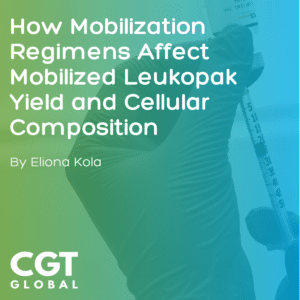
When programs require large scale CD34+ recovery, the mobilization strategy used prior to leukapheresis directly impacts yield potential, scheduling timelines, and operational efficiency.
Understanding the differences between GCSF mobilization, GCSF + PLX mobilization, and PLX only mobilization helps determine the optimal starting material for bulk CD34+ isolation.
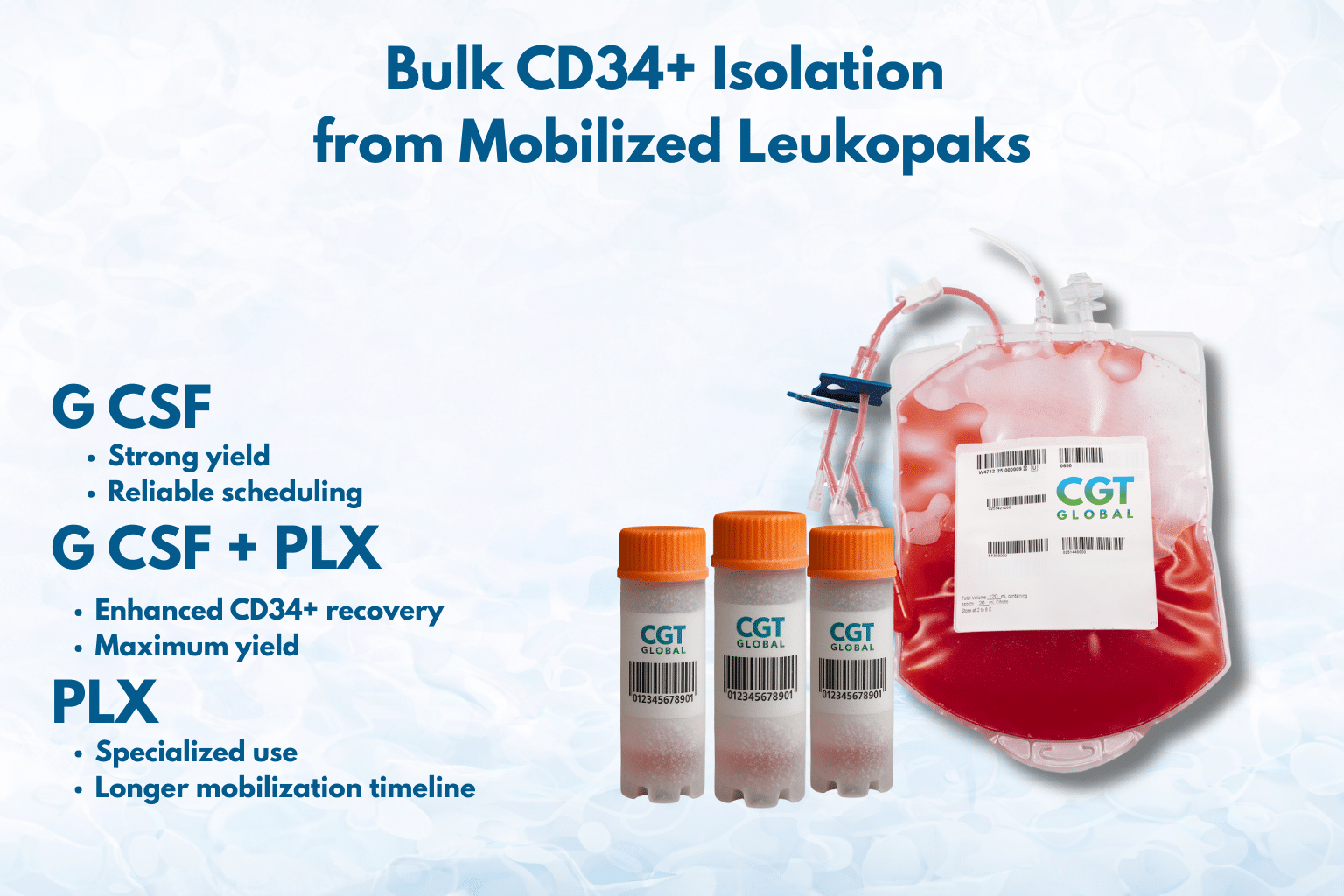
Bulk CD34+ Isolation from GCSF Mobilized Leukopaks
GCSF mobilization is the most established and widely used strategy for increasing circulating CD34+ hematopoietic stem and progenitor cells.
For bulk isolation programs, GCSF mobilized leukopaks provide:
• Reliable CD34+ enrichment
• Predictable donor scheduling timelines
• Strong balance of recovery and operational efficiency
• Scalable processing up to 20 billion TNC
Best For
• Stem cell therapy development
• Gene editing platforms
• CAR T and engineered cell workflows
• Process development
• CD34+ cell banking
For most programs requiring bulk CD34+ isolation, GCSF mobilization provides the most efficient and practical solution.
Bulk CD34+ Isolation from GCSF + PLX Mobilized Leukopaks
Combination mobilization with GCSF + PLX is designed to further enhance circulating CD34+ populations beyond GCSF alone.
For programs prioritizing maximum stem cell recovery, this approach can provide:
• Increased CD34+ yield potential
• Enhanced recovery for large scale workflows
• Improved output for demanding gene editing and manufacturing applications
Best For
• Programs requiring maximum CD34+ recovery
• Advanced gene editing platforms
• Large scale manufacturing development
• Applications where yield optimization is critical
When CD34+ output is the primary driver, combination mobilization may offer an advantage.
Bulk CD34+ Isolation from PLX Only Mobilized Leukopaks
PLX only mobilization is available for programs that specifically require this regimen.
However, due to longer mobilization timelines compared to GCSF or GCSF + PLX strategies, PLX only collections are generally not recommended unless scientifically justified.
Important Considerations
• Extended donor scheduling timelines
• Slower mobilization kinetics
• Operational delays compared to GCSF based strategies
Appropriate Use Cases
• Protocol driven mobilization requirements
• Mechanistic research involving mobilization pathways
• Programs where alternative agents are not suitable
For development programs prioritizing speed, scalability, and efficiency, GCSF based mobilization strategies are typically preferred.
Why Mobilization Strategy Matters for Bulk Isolation
Mobilized leukopaks can contain up to 20 billion TNC per collection. Maximizing CD34+ recovery from these high value collections requires:
• Large scale controlled processing
• High purity enrichment
• Strict quality oversight
• Cryopreservation optimized for post thaw viability
Choosing the right mobilization pathway improves recovery potential while reducing timeline risk.
Selecting the Right Approach for Your CD34+ Program
If your priority is operational efficiency and reliable recovery:
Choose GCSF mobilization.
If your priority is maximizing CD34+ yield at scale:
Choose GCSF + PLX mobilization.
If your protocol requires PLX only:
Proceed with awareness of extended mobilization timelines.
Bulk CD34+ isolation success starts with the right mobilization strategy.