By Eliona Kola, Process Development Scientist
“Hey Sophie, will the lab receive the leukopak from the recall donor tomorrow for the CD3⁺ isolations?”
That’s a question we ask our Director of Logistics Operations who also leads our Donor Scheduling Department more often than not. Coordinating around a donor’s availability can be challenging for any team, but Sophia and her team understand just how critical donor recallability is, especially in ex vivo cell therapy.
In this blog, I’ll highlight the importance of ex vivo work in cell therapy and how CGT Global successfully supports these efforts across both Research and Development and clinical programs, letting the data speak for itself.
Ex Vivo Cell Therapy
Cell therapy is a form of medical treatment that dates back to the 19th century, in which immune cells are used as autologous or allogeneic therapeutic agents to replace, repair, or restore the function of damaged or diseased tissues.
Ex vivo cell therapy refers to approaches in which cells are collected from a patient or healthy donor and processed outside the body in a controlled laboratory environment prior to administration. This external manipulation allows for precise control over cell selection, activation, expansion, and modification. These steps are critical to ensuring safety, consistency, and therapeutic efficacy.
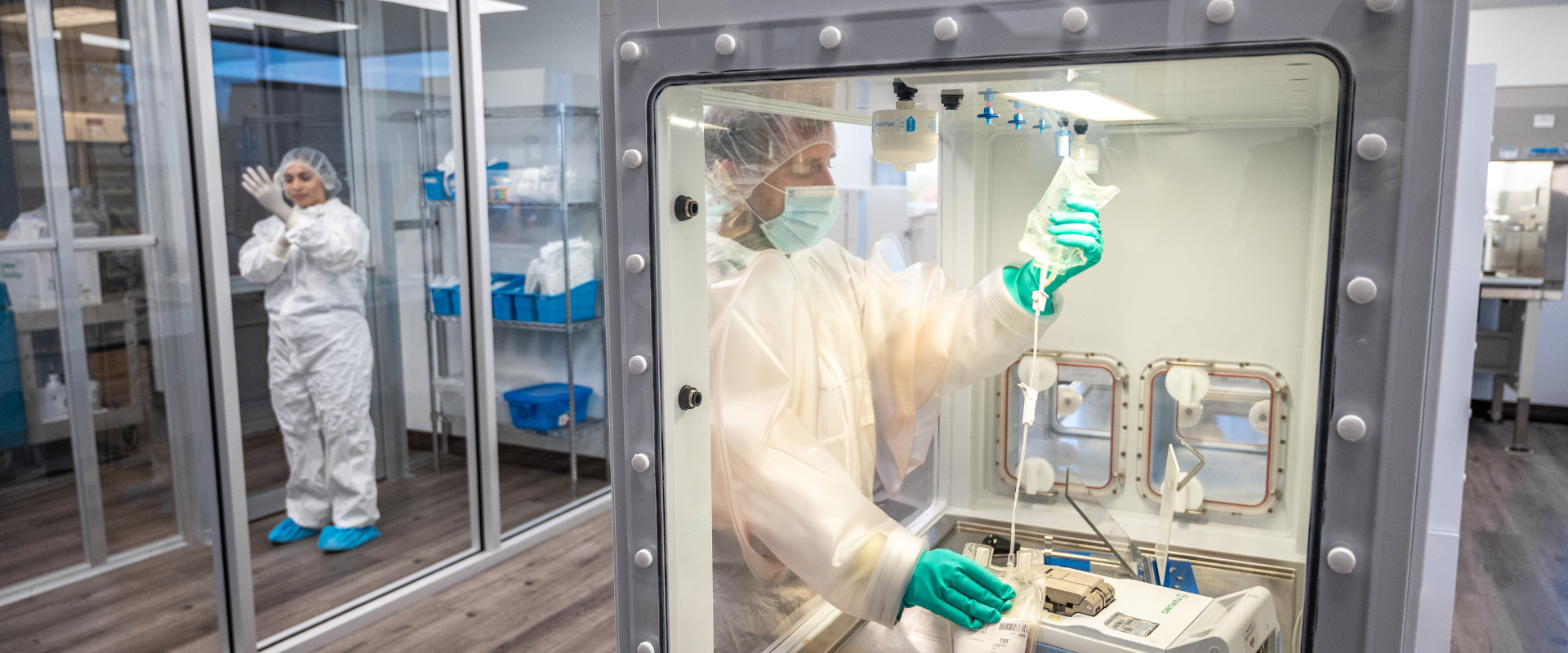
The ex vivo process typically begins with the collection of source material such as peripheral blood or leukopaks, followed by the isolation of specific cell populations including CD3⁺ T cells or NK cells. Depending on the therapeutic application, these cells may undergo activation, genetic modification, or expansion. Once processing is complete, the final cell product is formulated, tested for quality and safety, and released for downstream use.
A key advantage of ex vivo processing is the ability to closely monitor and optimize each stage of manufacturing. Parameters such as cell viability, purity, potency, and sterility can be assessed prior to administration. This reduces risk and improves clinical outcomes. This level of oversight is especially critical for advanced therapies including CAR T and other engineered cell therapies.
However, successful ex vivo cell therapy relies on more than robust laboratory workflows alone. Reliable donor coordination, recallability, and logistics play an equally critical role.
Inconsistent donor availability or fragmented communication between organizations supporting ex vivo programs can result in wasted materials, lost manufacturing time, and delayed patient progress due to the need to repeat experiments with new donor material.
Addressing Donor Recallability and Backup Planning
Donor recallability is a foundational pillar of successful ex vivo cell therapy, particularly as programs transition from early research into clinical development. The ability to reliably re contact and re collect from the same donor ensures consistency in starting material, minimizes variability, and supports reproducibility across studies and manufacturing runs.
At CGT Global, donor recallability and back planning for scientists working with ex vivo therapies are not treated as an afterthought, but as an integrated operational strategy. Below are key elements of our approach to ensuring donor recallability and material availability prior to an initial client shipment.
Scientific Partnership
CGT Global assigns a dedicated scientific team to each client. These professionals bring strong scientific backgrounds and are deeply invested in experimental outcomes. Fueled by a strong sense of ownership and collaboration, our Scientific Team enters initial discussions prepared with targeted questions designed to drive both scientific and operational success.
These early conversations address critical factors such as donor demographics, recallability requirements, inventory assessments, and logistics planning. By clearly defining these parameters upfront, the team ensures seamless communication with operations and minimizes downstream risk, setting each project up for success from day one.
Donor Engagement and Recall Strategy
Proactive donor engagement is central to ensuring recallability. CGT Global maintains continuous and transparent communication with donors to build long term relationships rooted in trust, education, and reliability. Donors are informed early about potential recall needs, collection timelines, and program expectations. This enables higher commitment and faster responsiveness when additional collections are required.

In parallel, CGT Global develops recall strategies and qualified backup options tailored to each program. This approach ensures continuity of supply, minimizes delays, and protects
critical research and clinical timelines, especially in high stakes ex vivo applications where consistency of starting material is essential.
The following case studies illustrate how donor recallability and strategic material planning function as key enablers of successful ex vivo programs.
Case Study 1: Donor Recallability as a Strategic Enabler of Ex Vivo Cell Therapy Development
In December 2024, Client X engaged the CGT Global Scientific Team to support a one year ex vivo cell therapy project. Leveraging CGT Global’s nationwide clinic network and laboratory infrastructure, 10 donors were identified, screened, and scheduled for donation within five business days. Each donor had a minimum inventory of 500 million mononuclear cells available in CGT Global Laboratories.
Leukopak collections were performed using the Spectra Optia® Apheresis System, with collections conducted into sterile bags containing ACD A anticoagulant to ensure product integrity. CD3⁺ T cells were isolated using a negative selection strategy, depleting cells expressing CD14, CD15, CD16, CD19, CD36, CD56, CD123, and CD235a via immunomagnetic separation. The resulting CD3⁺ pan T cell populations were characterized by flow cytometry for purity and viability prior to cryopreservation.
Cryopreserved materials were shipped using validated cryogenic packaging with full chain of custody controls. Following a two week internal evaluation, Client X selected three donors demonstrating optimal performance. All three donors were successfully recalled, and bulk CD3⁺ isolations were completed within 30 days of initial screening.
Donor recallability for this program was 100 percent successful through the end of 2025, at which point the project concluded on schedule and met all scientific and operational objectives. This case study demonstrates that donor recallability is not merely a logistical function, but a strategic driver of reproducible data, accelerated timelines, and successful ex vivo cell therapy development.
Case Study 2: Reliable Starting Material for Ex Vivo and In Vivo Research Through Strategic Donor Banking
In July 2025, Client Y evaluated CGT Global’s qualified banked donor inventory to support an ex vivo and in vivo development program. The assessment focused on peripheral blood mononuclear cells and CD3⁺ pan T cells, resulting in the selection of CD3⁺ cell lots from six qualified donors.
To ensure traceability, availability, and lot consistency, all cryopreserved vials associated with each donor lot were placed under material hold prior to initial transfer. In total, more than 135 cryopreserved vials across six donor lots were reserved under controlled storage conditions to support downstream comparability assessments.
The client conducted ex vivo functional testing using both stimulated and unstimulated CD3⁺ pan T cells, followed by in vivo evaluation in NSG MHC I and II mouse models. Six donor specific cohorts were evaluated, with successful engraftment observed across all groups. Tissue collection was performed 28 days post engraftment in accordance with study protocols.
Based on predefined performance criteria, two donor lots were selected for program continuation. Upon client authorization, materials were released and shipped within 24 hours using validated cryogenic logistics. No lot to lot variability was observed, supporting material comparability and suitability for continued development.
If you are developing or scaling an ex vivo cell therapy program and need reliable donor recallability, strategic donor banking, or scientific and operational support, contact the CGT Global Technical Team to discuss how we can support your research or clinical objectives.
Email our Technical Team to start the conversation