Bone Marrow CD105+ Cells, Frozen
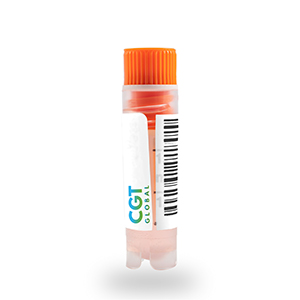
CD105 is a 90 kD homodimeric type I integral membrane glycoprotein, also known as endoglin. It is expressed on endothelial cells within endothelial tissue. However, CD105+ cells can also be isolated from human bone marrow. Upon culturing, these CD105+ cells show similar characteristics to plastic-adherent mesenchymal stem cells (MSCs). Cultured CD105+ cells express CD105, CD44, CD29, CD90 and CD106 but do not express CD14, CD34, CD45, or CD31 surface antigens. These cells demonstrate multilineage differential capacity into osteogenic, chondrogenic and adipogenic lineages.
Since our founding in 2010, CGT Global has pursued our mission to transform healthcare as we accelerate cell and gene therapy research and clinical trials, streamline the commercialization of new treatments, and map the last mile to patient access to these life-changing remedies. By innovating each stage in the cycle; development, commercialization, and delivery, we reduce the overall cost of the care and multiply access points so that millions can receive cutting edge, life-saving gene and cell therapies.

Description
CD105 is a 90 kD homodimeric type I integral membrane glycoprotein, also known as endoglin. It is expressed on endothelial cells within endothelial tissue. However, CD105+ cells can also be isolated from human bone marrow. Upon culturing, these CD105+ cells show similar characteristics to plastic-adherent mesenchymal stem cells (MSCs). Cultured CD105+ cells express CD105, CD44, CD29, CD90 and CD106 but do not express CD14, CD34, CD45, or CD31 surface antigens. These cells demonstrate multilineage differential capacity into osteogenic, chondrogenic and adipogenic lineages.
Bone marrow mononuclear cells (MNCs) are separated from whole bone marrow by a density gradient centrifugation protocol. Bone marrow CD105+ cells are positively selected using immunomagnetic anti-CD105 microbeads from the MNC population. Isolated primary cells are characterized by flow cytometry prior to cryopreservation to ensure a highly pure and viable cell population.
Cells were obtained using Institutional Review Board (IRB) approved consent forms and protocols.
Additional information
| Anticoagulant | |
|---|---|
| Format | |
| Grade | |
| Species | |
| Cell and Tissue Source | |
| Disease State | |
| Donor Attributes |
Used in Research
Selected publications demonstrating the use of human bone marrow and bone marrow–derived cells sourced from StemExpress in regenerative medicine, stem cell, and immunology research.
Identification of osteogenic progenitor cell-targeted peptides that augment bone formation
Nature Communications · 2020
Bone marrow aspirates were used to study osteogenic progenitor cell targeting and bone formation mechanisms.
“Bone marrow aspirates were obtained from healthy human donors (StemExpress…)”
Bone Marrow · Regenerative Medicine
Subretinal versus intravitreal administration of human CD34+ bone marrow-derived stem cells
Annals of Translational Medicine · 2021
Bone marrow-derived CD34+ stem cells were used to evaluate regenerative therapies in retinal degeneration models.
“Fresh bone marrow from a healthy human donor was obtained from StemExpress…”
CD34+ Cells · Stem Cell Therapy
Effects of intravitreal injection of human CD34+ bone marrow stem cells
Experimental Eye Research · 2020
Bone marrow-derived CD34+ stem cells were used to investigate therapeutic effects in retinal disease models.
Stem Cells · Ophthalmology
Human mesenchymal stem cells suppress proliferation of activated lymphocytes
Cellular Immunology · 2016
Bone marrow-derived mesenchymal stem cells were used to evaluate immune suppression and regulatory T cell responses.
“Bone marrow-derived MSCs… were purchased from StemExpress (Placerville, CA)”
MSC · Immunology
Proteomic analysis of exosomes secreted from mesenchymal stromal cells
Biology · 2021
Bone marrow-derived mesenchymal stromal cells were used to study exosome secretion and cellular communication.
“Bone marrow specimens… purchased from StemExpress…”
MSC · Exosomes
Related products
-
Bone Marrow Mesenchymal Stem Cells, Frozen
Select options This product has multiple variants. The options may be chosen on the product page -
Bone Marrow Mesenchymal Stem Cells, Fresh
Select options This product has multiple variants. The options may be chosen on the product page -
Bone Marrow CD133+ Stem/Progenitor Cells, Frozen
Select options This product has multiple variants. The options may be chosen on the product page -

Whole Blood, Fresh, ACD-A
Select options This product has multiple variants. The options may be chosen on the product page